Seasonal Migrations
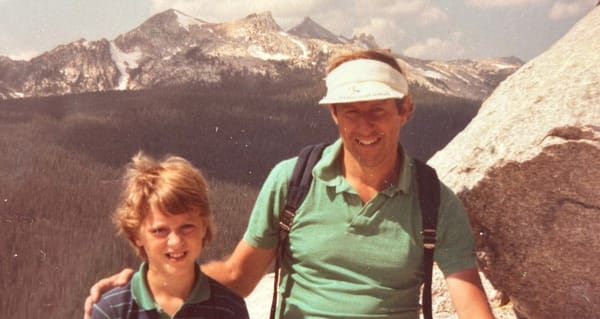
This year's onslaught of bad news has us all looking for perspective. I'm not the only one who wanted to fly home.
Ever since Chris Keyes and I began gathering story ideas for RE:PUBLIC, I’ve been incredibly heartened by all the smart, engaged feedback and pitches we’ve received about public lands. We are grateful for this community, and for the work that so many of you are doing.
And like most of you, the onslaught of bad news has also made me eager for some perspective. This is the time of year that we all start looking to restrospectives to put 2025 in context. For public lands, it seems like it’s been the worst ever: like the wizard’s regime in Wicked: For Good, this administration seems to have a special hatred for animals and birds and anyone who might be found consorting with them.
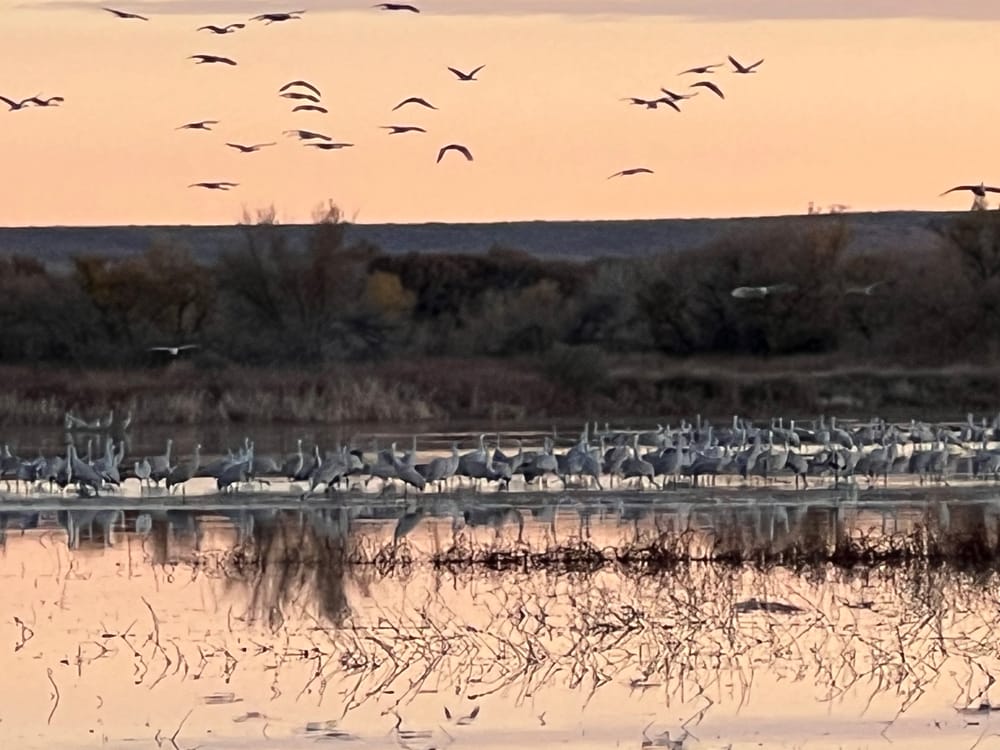
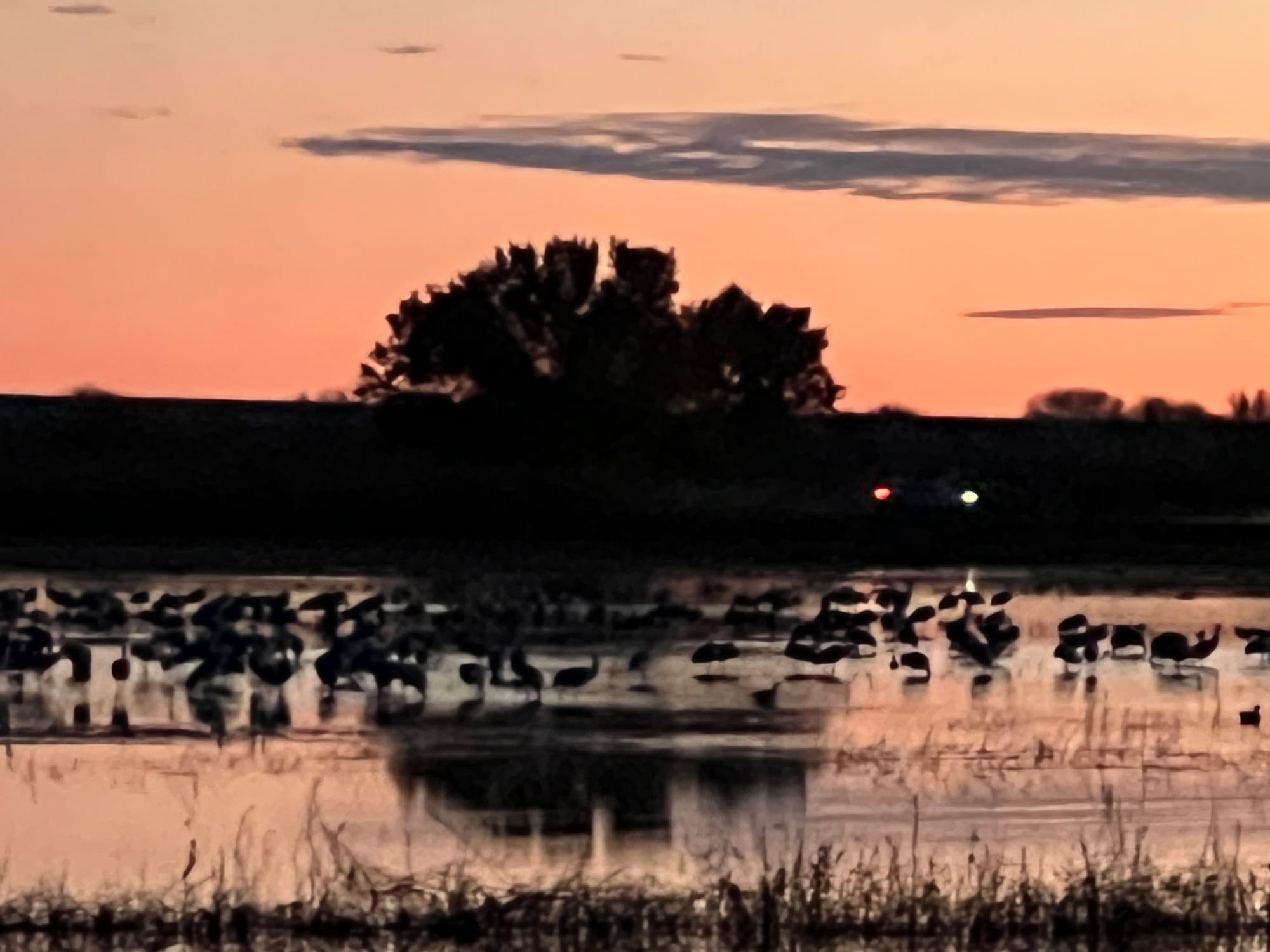
That’s why my daughter and I drove down to the Bosque del Apache National Wildlife Refuge to see the annual arrival of the sandhill cranes, which migrate in from the northern Rockies to spend the winter in the flooded fields near Socorro, New Mexico. Camille is 14, so I bribed her for the long drive from Santa Fe with a visit to Old Navy on the way.
I’ve always felt a sense of both wonder and loss at Bosque del Apache: awe at the skies filled with heavy-bellied cranes, the still water reflecting snow geese and clouds. And a weird mix of sadness and gratitude in the knowledge that this habitat, which the birds have returned to for millennia, has had to be artificially managed by humans ever since the 57,331-acre refuge opened in 1939. Even then, centuries of agriculture on the Rio Grande had shrunk the seasonal wetlands full of native grains like millet, and since then the fields must be plowed, flooded, and planted with enough corn and native grains to sustain, by Fish and Wildlife’s 2024 estimate, 24,900 sandhill cranes and their duck and goose friends.
It doesn’t help that, like bird populations themselves, the Rio Grande is in crisis. According to a November study published in the journal Discover Water, drought and irrigation have conspired to suck out more than 85 percent of the river’s natural flow, putting the flyway in jeopardy. (Source NM)
This year, however, the Refuge’s work was delayed by the government shutdown. Friends of the Bosque del Apache National Wildlife Refuge was forced to cancel its annual Festival of the Cranes, scheduled for December 3 through 7. “With over a month of lost prep time during the busiest season of the year and an already decreased staff headcount,” the Friends announced, “the first priority for the refuge team upon their return to work will be mowing, flooding fields, and preparing the habitat that winter birds require. “
“Last year, there were 500 registered attendees, along with 700 or 800 unregistered guests,” festival manager Cari Powell told the Santa Fe New Mexican, adding that this year, they’d expected even more, attending more than 100 classes and lectures.
Instead, they got a visit from U.S. Rep. Gabe Vasquez (D-NM) on December 6 to discuss the sorry state of funding. In a press release, Vasquez’s office noted that just 10 employees have been left to manage the Refuge, and that federal funding had dropped from $2 million to $1.4 million.
But the cranes still came. “The birds have been coming to this area for millennia,” Powell told the New Mexican. “The birds are used to coming here, the way that monarchs somehow know, with four generations, how to get back to home at the end.”
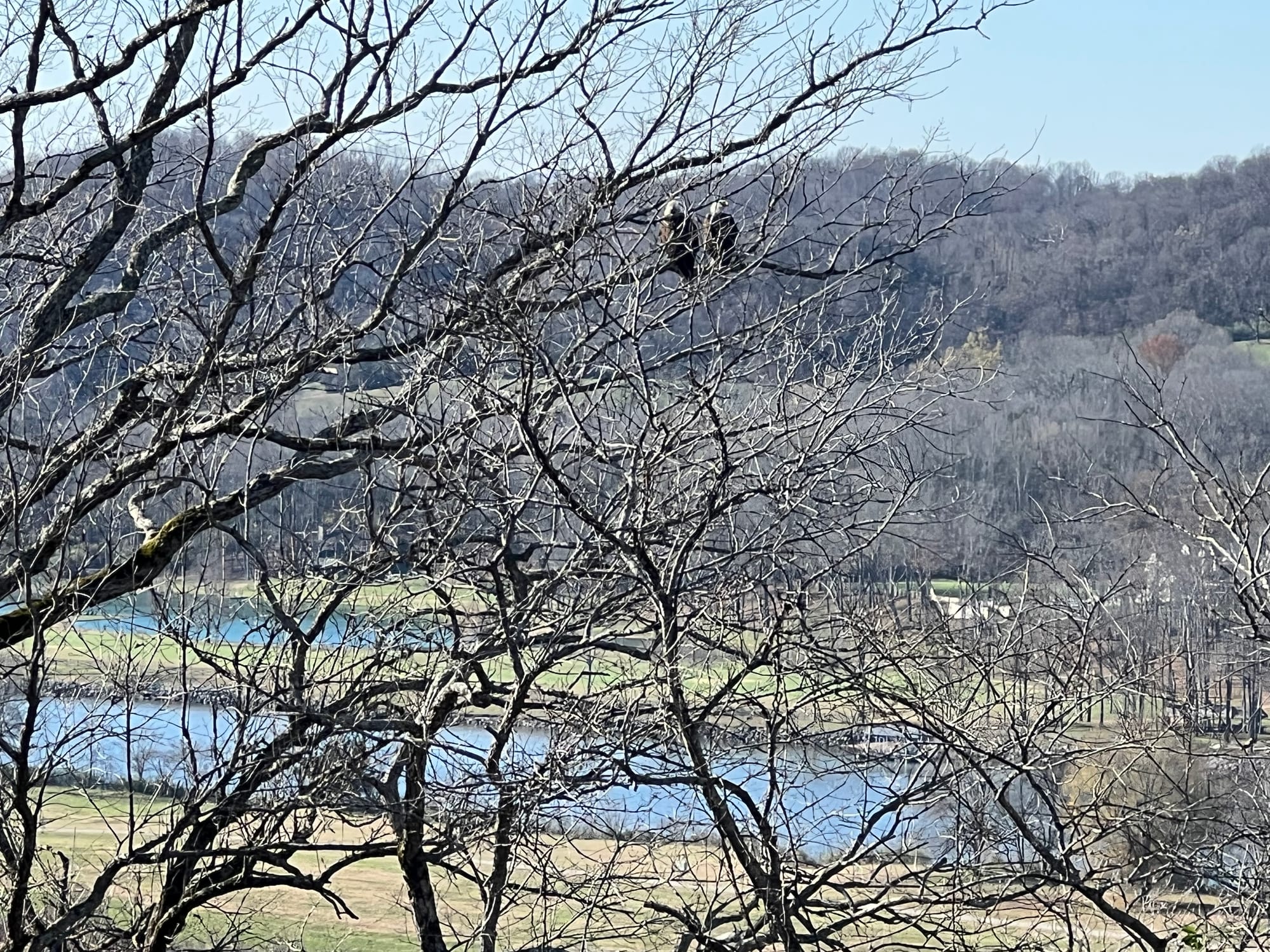
That’s what I had just done. By way of introduction, I grew up in Nashville, Tennessee, and my family still lives on the outskirts of the city, in a rural hairpin of the Cumberland River called Bells Bend. When we first moved to the farm, when I was in college, the Tennessee Wildlife Resources Agency built a hacking tower on a tall bluff overlooking the river and fed young eaglets with an eagle puppet until they were old enough to fly. For decades now, eagles have returned every winter, fishing in the wetlands that line the river. As with the Bosque del Apache, these are man-made creations, flooded by local landowners like my stepfather, who loves bird hunting and conservation in equal measure.
This year at Thanksgiving, the mating pair was apparently house hunting. Their previous nest, in a tall sycamore across the Cumberland, looked through binoculars to be in disarray. For three days, they spent long hours huddled together on the same branch maybe 100 yards from the house, discussing the merits of nest siting.
Cranes, too, had made Bells Bend a stopover. In 2008, a pair of endangered whooping cranes were clocked in a farmer’s field about a mile upriver. They spent the winter high-stepping through his turnip field, earning notice from birdwatchers, schoolkids, and the New York Times. The locals were proud. Over the years, regardless of political affiliation or connections, this small community has unified in support of their rural pocket of Nashville, fighting off a dump, a chemical factory, and a massive housing development billed as a “second downtown.”
That’s the kind of thing that gives me hope.
If there’s something we can all get behind, birds seem as good a candidate as any. Who does not like birds?
It’s not like they’re doing great. According to a much-discussed 2019 report from the Cornell Lab of Ornithology, we’ve lost three billion North American birds since the 1970s.
But the Trump administration seems determined to take them out. First, the Department of the Interior announced in April that it no longer considered incidental killing of migratory birds a violation of the Migratory Bird Treaty Act.
The administration’s proposed 2026 budget would eliminate the U. S. Geological Survey’s Ecosystems Mission Area, home of the storied Bird Banding Lab and scientists who track stuff like wildlife disease outbreaks. In October, during the government shutdown, a judge compelled the Department of Interior to submit a list of proposed staffing cuts that included abolishing 143 positions at Fish and Wildlife, including 35 of 269 staff at the agency’s Migratory Bird Program.
Then, in November, came the announcement of a proposed new EPA rule that would strip Clean Water Act protections from up to 85 percent of wetlands nationwide. “Finally addressing an issue plaguing all Americans,” wrote Wes Siler in his Substack newsletter, “the Trump administration today announced a plan to kill off most remaining wild birds.” Siler and others had predicted the bird war back in November 2024, when Polyannas like me were still hoping that the conservation rollbacks outlined in Project 2025 would remain back-room pipe dreams.
A week after the announcement of that EPA rule, the administration took on the Endangered Species Act. Would you like more depressing links? I can’t even….
At first the Bosque felt like a bust. We dutifully motored along the unpaved loop road around the refuge, spotting a few faraway cranes pecking through dirt fields, but otherwise not much. Old Navy might have been the highlight of this trip, I thought.
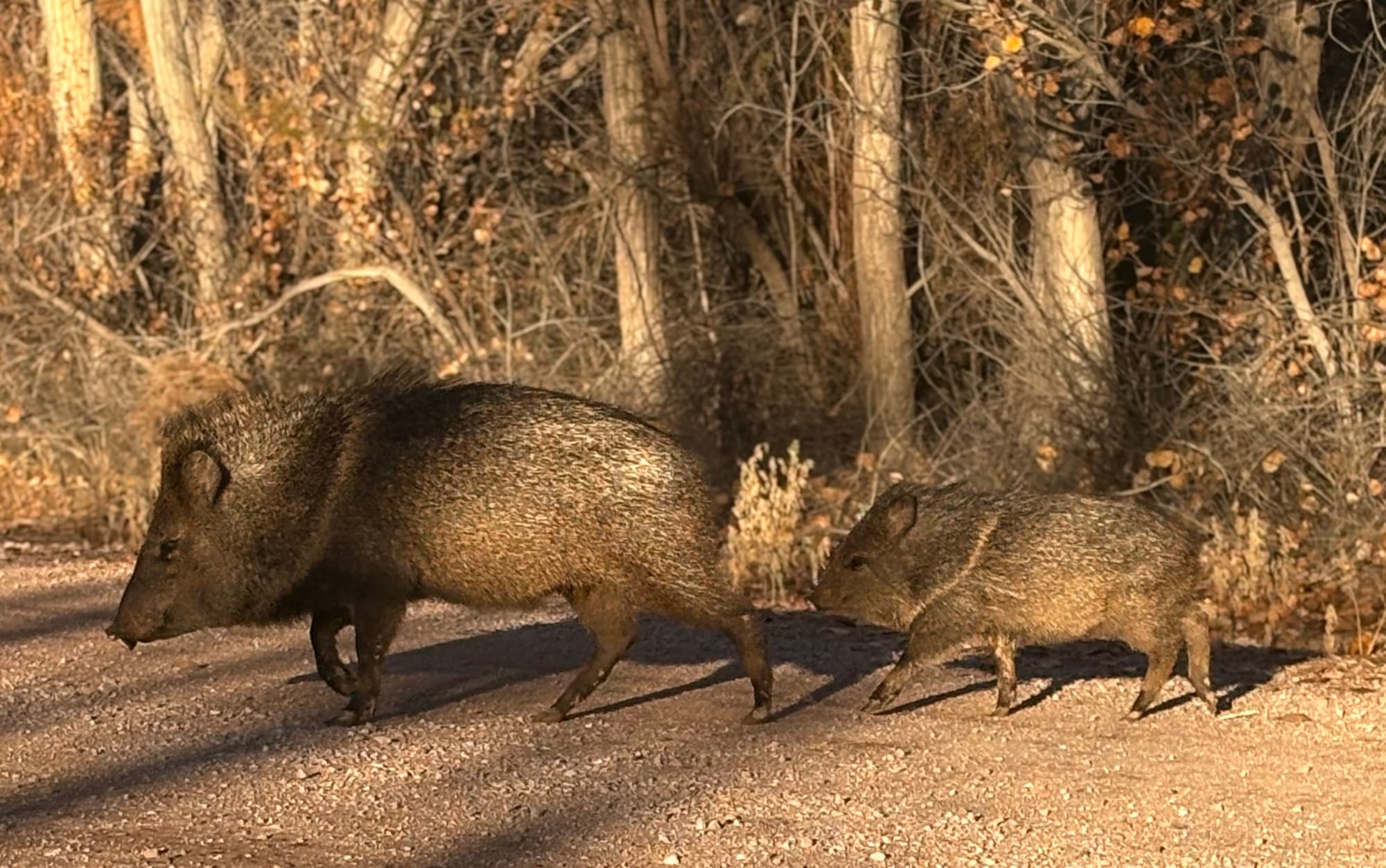
Then Camille pointed out into a grove of trees, to the dense rectangular shadow of a huge buck. He trotted out with a doe and two big youngsters. Around the next bend, a javelina family, completely with a little prickly baby, waddled across the road. More deer, and then a slim coyote, trotting along a flooded field, scoping out dinner.
The move at Bosque del Apache is to position yourself to view the sunrise fly-out or sunset fly-in, when the birds return to roost in the flooded fields. A half hour before sunset, the flight deck, a jetty-like structure jutting out into the water, was already filling with birders and families armed with binoculars and long lenses.
As the sun slanted down behind the Chupadera Mountains, great flocks of Canada geese, snow geese, and fat sandhill cranes splashed in for a landing. Honks and rattles and wings filled the air.
“Shut up, cranes!” one little girl called out.
We wandered off the flight deck and sat down along the shoreline, where we spread a blanket over our knees and listened to the chorus, a racket like hordes of untrained children blowing toy trumpets and kazoos.
I was overcome by the abundance of this place. I felt, amid all this drought, amid this dark season, a profound sense of home.
What Makes a RE:PUBLIC Story?
We've been gratified by the outpouring of interest (and sympathy!) from Chris’s newsletter two weeks ago about our brush with a journalism scammer proposing a story about homelessness on public lands. We were initially taken in, as were many other North American publications. As I’ve been joking in emails, RE:PUBLIC stands ready to wire money to any of your distant relatives.
One commenter on Instagram asked a good question, however. Why was that such a strong pitch? In other words, what makes a good RE:PUBLIC story? We aim to demonstrate that in the next few months, as we roll out more features and projects unpacking what’s happening on our public lands.
That’s the thing, though. Policy journalism is often two things at once: super important and deadly boring. That’s why we are more interested in compelling stories than general topics. We want to read narratives populated by characters both human and wild.
As our writers’ guidelines state, “we like deeply reported stories that combine two essential qualities:
- Narrative drive that pulls readers in with vivid characters, scenes, and storytelling
- Policy-impact reporting that exposes, explains, or illuminates decisions and debates and that demonstrates real consequences about how America’s public lands are managed
We are not interested in travelogues, gear reviews, or surface-level summaries. We want pitches that reveal something new, challenge conventional wisdom, or aim to hold institutions and power brokers to account.”
If that’s you, drop me a line at editors@republic.land.
Update
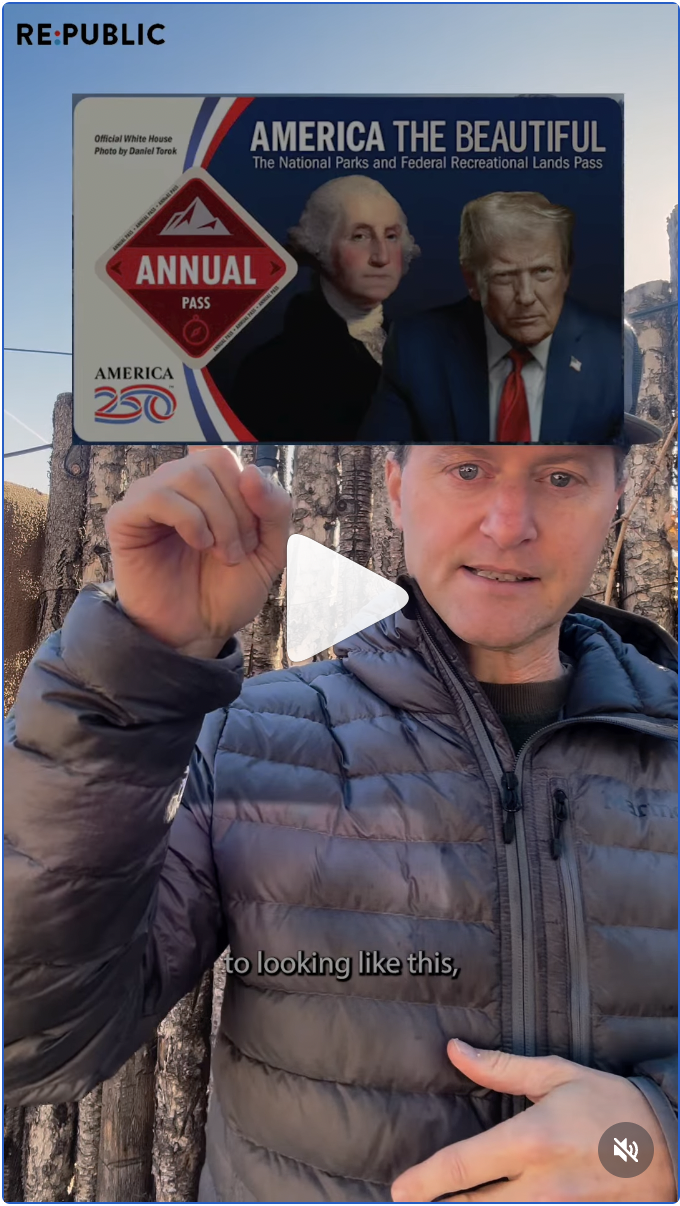
In an Instagram post earlier this week, RE:PUBLIC Executive Director Chris Keyes discussed the Interior Department's announcement that it was going to replace images of the national parks on its annual park pass with an image of President Trump. As Keyes reported, this may be illegal. Indeed, now an environmental group is suing to stop it. “In documents filed with the Federal District Court for the District of Columbia on December 10, the Center for Biological Diversity (CBD) argued that the new pass design violates the Federal Lands Recreation Enhancement Act of 2004. According to the text of the act, the Departments of the Interior and Agriculture must hold an annual, public competition to select the artwork for the following year’s America the Beautiful Pass.”
The Good, the Bad, and the Ugly
Every Friday, our team shares critical stories about public lands from around the internet. This list could be exhaustive and exhausting, but our intent is to inform, not overwhelm. Instead, we choose three to five important stories you should be aware of—including at least one piece of good news.
The Good: Federal Judge Throws Out Trump Order Blocking Development of Wind Energy. “A federal judge on Monday struck down President Donald Trump’s executive order blocking wind energy projects, saying the effort to halt virtually all leasing of wind farms on federal lands and waters was “arbitrary and capricious” and violates U.S. law.”
The Bad: A Top Trump Official Has Financial Ties To Controversial Nevada Lithium Project “Karen Budd-Falen, a top official at the Department of the Interior, has financial ties to the controversial Thacker Pass lithium mine in northern Nevada—a project that the Trump administration worked to fast-track during its first term. In recent months, the administration took an equity stake in the mine and the mine’s parent company.” (Hat tip to Public Domain and co-publisher High Country News, as well as the Land Desk, for their investigations into Budd-Falen’s financial ties.)
The Ugly: National Park Service drops free admission on MLK Day, Juneteenth while adding Trump’s birthday “The National Park Service will offer free admission to U.S. residents on President Donald Trump’s birthday next year — which also happens to be Flag Day — but is eliminating the benefit for Martin Luther King Jr. Day and Juneteenth. The new list of free admission days for Americans is the latest example of the Trump administration downplaying America’s civil rights history while also promoting the president’s image, name and legacy. Last year, the list of free days included Martin Luther King Jr Day and Juneteenth — which is June 19 — but not June 14, Trump’s birthday.”